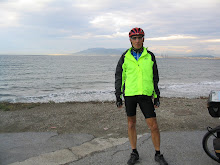
(Photos by Joseph Insalaco)
When I told friends that I was going
to cycle across Ohio, I was met with skepticism, and asked questions like,
“why”, or “couldn’t you find something more interesting than Ohio”. I am glad that I wasn’t discouraged by their
comments. The Ohio to Erie Trail is a gem
and well worth the long drive it took to get there from Virginia.
The Ohio to Erie
Trail (OTET) extends 326 miles from the Ohio River at Cincinnati to Lake Erie’s
shore in Cleveland. The OTET is made up of individual rail trails, canal paths,
and some country roads and city streets.
In addition to the 2 terminus cities, the trail goes through Columbus
(the state’s capital), Akron, and numerous quaint small towns and miles of
pastoral countryside. Even though the
trail is named Ohio to Erie, we started at Lake Erie and cycled to the Ohio
River. From there we cycled back to
Cleveland. Our round-trip cycling
journey totaled 650 miles. Many more trip
photos, routes, and daily miles can be seen on our trip blog.. (https://our-2022-otet-ride.blogspot.com/).

Cycling from Cleveland to Akron
 Our ride began in a rain that lasted about an hour. The rain was just a minor nuisance and not
worth the time to put on our rain gear. We traveled on city streets in marked
cycle lanes until we reached the trail that led to Akron. For the first several miles along the trail,
we saw Cleveland’s historical industrial area.
While that maybe a turnoff to some, we found the dilapidated steel mills
interesting and appreciated how the trail incorporated many of the industrial
“castoffs” as trail art and educational sites. We stopped at the Steel Heritage Center, to look at
a steel ingot (a slab) several inches thick and several feet long that was formed
into a coil of flat steel. We also saw a massive railroad car used to transport the slag waste away from an iron furnace. Further along the trail, we stopped at a
display depicting a railroad roundhouse and a bench made from the wheel
assembly of an abandoned
rail car.
Our ride began in a rain that lasted about an hour. The rain was just a minor nuisance and not
worth the time to put on our rain gear. We traveled on city streets in marked
cycle lanes until we reached the trail that led to Akron. For the first several miles along the trail,
we saw Cleveland’s historical industrial area.
While that maybe a turnoff to some, we found the dilapidated steel mills
interesting and appreciated how the trail incorporated many of the industrial
“castoffs” as trail art and educational sites. We stopped at the Steel Heritage Center, to look at
a steel ingot (a slab) several inches thick and several feet long that was formed
into a coil of flat steel. We also saw a massive railroad car used to transport the slag waste away from an iron furnace. Further along the trail, we stopped at a
display depicting a railroad roundhouse and a bench made from the wheel
assembly of an abandoned
rail car.


 For breakfast, we sought out the Rawley Inn that was just
off the trail and a few miles from our hotel.
The Rawley Inn is a Triple D featured restaurant (https://www.flavortownusa.com/locations/2342/rowley-inn/). Although some of the menu items seemed exotic
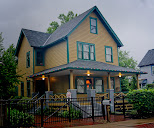
to our simple upbringings, our food was very good. Across the street from the Rawley Inn is the
house was used in the classic movie “Christmas Story” (https://www.achristmasstoryhouse.com/).
This movie is a “must see” for my grandsons at Christmas.
For breakfast, we sought out the Rawley Inn that was just
off the trail and a few miles from our hotel.
The Rawley Inn is a Triple D featured restaurant (https://www.flavortownusa.com/locations/2342/rowley-inn/). Although some of the menu items seemed exotic
to our simple upbringings, our food was very good. Across the street from the Rawley Inn is the
house was used in the classic movie “Christmas Story” (https://www.achristmasstoryhouse.com/).
This movie is a “must see” for my grandsons at Christmas. We passed through many small towns and natural areas where wildlife abounded. The canal’s waters hosted blue herons and the path was often blocked by flocks of geese that blocked the trail. Despite our noisy efforts, the geese did not want to move.

We arrived in Akron in mid-afternoon. Not that we had lots of miles to cycle, but rather there was so much to see along the way and we made many photo stops. Akron was founded in 1825. Around the turn of the century, Akron’s tire manufacturing helped it become known as the “rubber capital of the world.” Other Akron trivia includes, the hamburger. It was supposedly invented there. Thomas Edison visited often (his wife was an Akronite). And, NBA superstar Labron James calls Akron home—and the Main Street was renamed “King James Way.”

Millersburg has a vibrant business district and we stayed in
the Hotel Millersburg. The hotel is
listed on the National Register of Historic Places and President Grover
Cleveland reportedly stayed there on December 8, 1800. Besides hosting a
president, the hotel also hosts quilter retreats and its halls were adorned
with many intricate quilts.
Near the end of our walking tour of Millersburg, we stopped
at Troyer’s Sweet Shoppe were the Chocolatier, Verna provided us with some rich
chocolates. She told us that she was the third generation Chocolatier in the
shop founded by her grandmother. As we
wandered back to the hotel, we passed the Millersburg Creamery. After eating more chocolates than a healthy
diet would allow, we did restrain from getting ice cream at the very popular shop.

Millersburg to Mt, Vernon
After 20 years of cycling trips, our ride from Millersburg
to Mt. Vernon was one of the nicest cycling days either of us could
remember. Of course, we are old and our
memories are disappearing. Really, we had great weather and fantastic cycling.
(This is what my notes indicated, but as I write this story, I can’t remember
any specifics.)
Our morning started with an early breakfast that we found only 3 blocks from our hotel. We were surprised to find a restaurant that opened at 6 a.m. Afterward, it was only a short, downhill ride from our hotel to the trail. This trail is a continuation of the bike/buggy trail we came into town on the previous day. Our ride west was flat, straight, and fast. The trail only lasted 7 miles before it ended and we had to cycle on country roads. The roads could have been a continuation of the trail, because we did not see any cars. This section was also about 7 miles long and had gentle rolling hills that allowed easy cycling. Near the end of this segment, we heard the “clip clop” of horses gaining on us. We were going 12 mph when 4 buggies easily passed. They were filled with Amish families.

When we got to the next trail, the buggies were stopped at a
trailhead picnic area. While they waved,
we were not asked to join their picnic. So, we got on the trail and headed
up the mountain. The trail was another
buggy/bike trail on a former railroad right-of-way. We climbed for 3 miles on a gentle slope that
allowed us to pedal at 10 mph with ease.
Along the way, many more buggies passed us but we did not see any other
cyclists.
As we crested the mountain, we saw still more buggies. Our descent on the other side of the mountain was equally as gentle as our climb. Thus, no screaming downhill ride. This trail ended after 12 blissful miles. We next transitioned through a small town and then got on our last trail for the day. No buggies were allowed on this trail but we saw lots of walkers and cyclists. Along the way, we cycled over the Bridge of Dreams, a 370-foot covered bridge located near Brinkhaven, Ohio. The 1920s bridge was built for the railroad and in 1998 was incorporated into the trail. Reportedly, it is the second longest covered bridge in Ohio and third longest covered bridge in the United States.

We stayed in the town of Mt. Vernon founded in 1805 and named after George Washington’s estate. We saw a historical marker indicating that the town was the location of Johnny Appleseed’s first orchard. The town was winner of Ohio Magazine’s 2018 Best Home Town award. The town was vibrant with restaurants and shops. We visited the Woodward Opera House, the oldest opera theater of its kind in the United States. The theater, after many years of renovation and restoration, had been transformed into a local cultural and performing-arts center.
Mt. Vernon to Columbus
We left Mt. Vernon early to beat the predicted rain and were successful. Our ride was easy but temperature and humidity combined to create a steam bath. The day’s “high points” were found between the 15- and 20-mile marks. The first was a marker that indicated we were at the highest point on the Ohio to Erie Trail.

We concluded that the rest of our journey would be easy because it would be downhill to the Ohio River. The second marker indicated that we were at the halfway point to the Ohio River.

Columbus, Ohio’s capital city was entered by way of trails and marked cycling lanes on city streets. The first European settlers arrived in 1797. The city was named for Italian explorer Christopher Columbus and became the state capital in 1816.
Columbus to Xenia
The start of our day was hot and it got hotter as the day
progressed. After about 7 miles of
cycling, we found a place for breakfast.
Actually, we had a “choice” of either McDonalds or Tim Hortons. Hum, American or Canadian fast-food breakfasts? We chose Tim Hortons because we like their
muffins.
While we saw lots of people on the trail and had extended conversations with two. First, we met William Galloway riding a Catrike (a 3-wheel recumbent) and pulling a trailer.
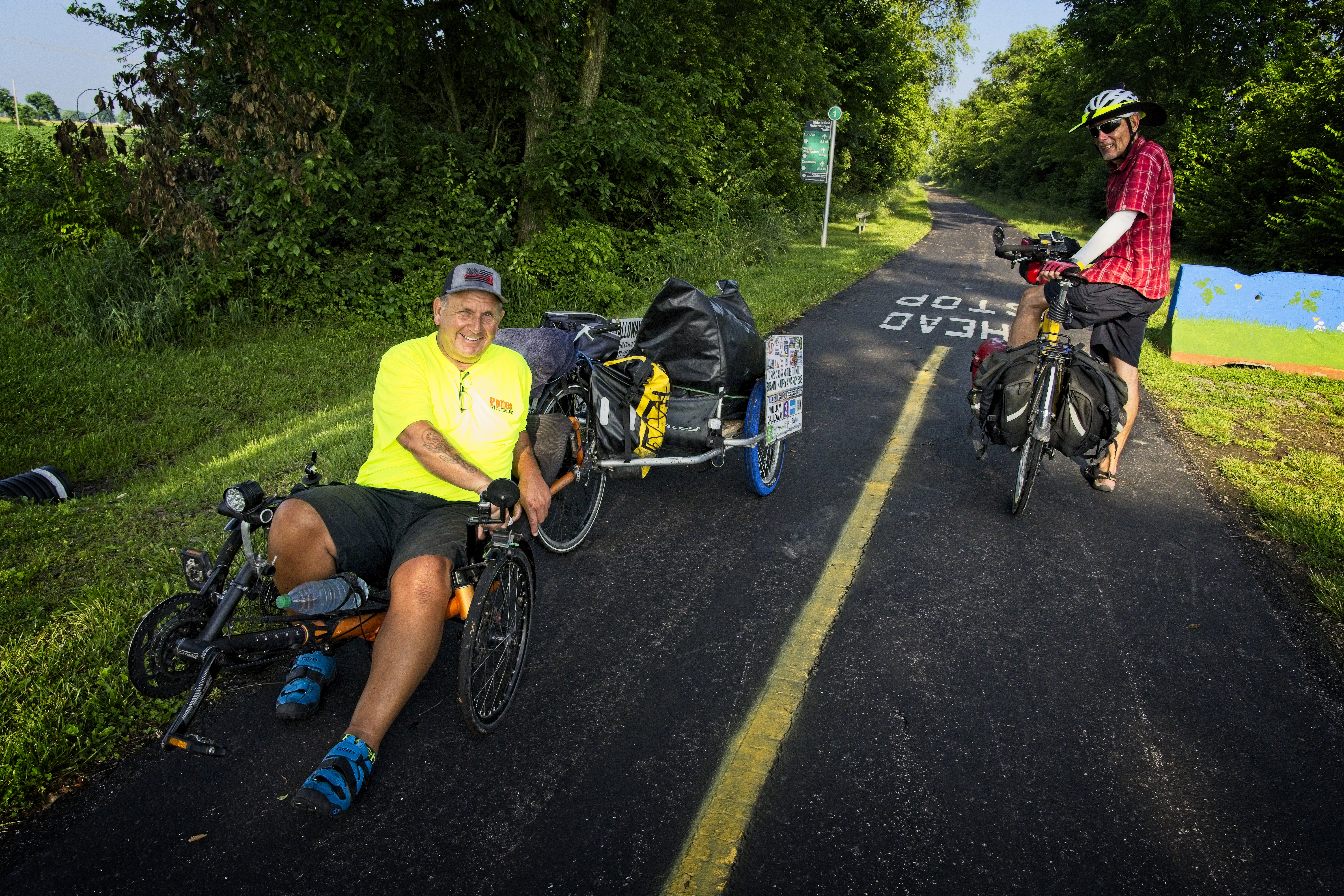
He was on his fourth trip across the United States in four years. He was very pleasant and neat looking. William was in no hurry to move on, nor were we. He surprised us by saying that he was homeless but never without a place to stay. When he wasn’t in his tent or trail shelter, he was with friends or kind strangers. He said that he started his travels after recovering from a brain injury. Over all, he has cycled 37,500 miles and gone through 3 trikes and 5 trailers. The second person we met was Heidi. She was setting up a lunch stop for 11 cyclists on a Wilderness Voyageurs tour on the OTET. Her company is located in Ohiopyle, PA and provides fully supported bike adventures. Each day we carried our own gear and looked for places to eat and sleep. Heidi’s cyclists had their gear transported in a trailer to their next night’s lodging, breakfast and dinner in prearranged restaurants, and lunch provide during their ride. Heidi filled our water bottles and shared some wonderful Amish pecan cinnamon rolls.

The Ohio to Erie Trail is the overarching name and is
comprised of many trails with their own names.
About half our day cycling to Xenia was on the Prairie Grass Trail. It was freshly paved which was nice. However,
the trail lacked much interest. We saw mostly
farm fields but we enjoyed the diversions through the small towns along the
trail. One of the towns, London, founded
in the early 1800s, as a Methodist community. Next was Cedarville where we
passed the Cedarville Opera House.
Finally, we arrived in Xenia which was founded in 1803, the same year
Ohio was admitted to the Union. Xenia was once a safe haven for enslaved people
traveling to freedom along the Underground Railroad.
Xenia to Cincinnati
Again, we left our hotel without breakfast. We had a long day ahead of us, so an early
start was necessary. What we failed to
factor in was the impact of previous night’s severe thunderstorm. Our first hour on the trail was in the dark, and
we encountered 20 miles of downed branches and trees obstructing our
passage. It would have been a difficult
obstacle course for us even if we had waited for the daylight. Along the way we
cleared paths, cycled around debris, or lugged our bikes over fallen
trees. Our clean-up stops were met by
hungry mosquitoes and Joe ended up with a poison ivy rash on his legs.
The OTET has several internet sites that list trail
construction and related detours. Our
first major detour took us off the trail and required us to climb a mountainous
road to get around the closed area. We
survived the climb and stopped at the top at a Starbucks for some cold
water. Burt, the barista, filled our
bottles with ice and cold water. In that heat, it was a wonderful treat. While Burt was filling our bottles a little
boy, in line with his mother, kept asking his mother about my cycling attire.
He wanted to know what was on my arms (sun sleeves), on my hands (gloves), and
on my head (helmet with sun shade). Mom kept trying to quiet the boy, but I
gladly answered all his questions.

As the morning progressed, the trail was bordered by large
trees providing a canopy cover of coolness to the day’s increasing heat. As we entered Loveland Ohio, we quickly
transitioned into the bright sunlight and a radically different trail. We first saw a tropical drink stand just a
step off the trail. The barista was
dishing ice into tall glasses that would soon be followed by bright colored
syrups. Next to it was a café with
outdoor seating with umbrellas providing shade to its many customers. We then
saw an outdoor picnic area with overhead misting pipes cooling off hot cyclists
and hikers. Looking further down the
trail we could see restaurants, a bike shop, and hundreds of brightly colored
canoes and kayaks ready for an adventure on the Little Miami River. Loveland is a resort town, appropriately
nicknamed “Little Switzerland of the Miami Valley”. It was no surprise that the
town was full of people. We cycled through lots of towns on this and previous
rides and wondered why more communities didn’t make their “trail-town” a unique
destination.
When we got into Cincinnati’s metropolitan area, we had
about 10 miles of urban cycling. While
the traffic was ok, the roads were in poor condition making the day’s end even
more challenging. At our hotel Joe looked at his phone and saw that it was 97
degrees with a “feels like” temperature of 111 degrees. Despite the heat, we
walked to another Triple D recommended restaurant, the Taste of Belgium (https://www.flavortownusa.com/locations/738/taste-of-belgium). It was about a mile from our hotel. The food was
excellent but the walk was not.
Cincinnati to Mason

 After the previous day’s 70-mile ride in the heat, we were
thankful that we had planned to cut our trip back to Xenia into two segments of
about 35 miles each. The town of Mason
was the best we could find with lodging.
However, it required us to cycle 5 miles off the trail for a hotel. We were surprised to see a large amusement
park called Kings Island and a stadium along the way. The hotel in Mason did not have a guest
laundry so we took advantage of the hot weather and hung our wash on a clothes
line strung between our bikes in the hotel parking lot. The sight generated
lots of smiles and comments from other guests.
After the previous day’s 70-mile ride in the heat, we were
thankful that we had planned to cut our trip back to Xenia into two segments of
about 35 miles each. The town of Mason
was the best we could find with lodging.
However, it required us to cycle 5 miles off the trail for a hotel. We were surprised to see a large amusement
park called Kings Island and a stadium along the way. The hotel in Mason did not have a guest
laundry so we took advantage of the hot weather and hung our wash on a clothes
line strung between our bikes in the hotel parking lot. The sight generated
lots of smiles and comments from other guests.
Mason to Xenia
We cycled back to Xenia on a clean trail. The maintenance crew did a fantastic job of
cleaning up the storm damage we encountered when we left Xenia several days earlier.
Before I left home, Helen (my wife) said that we should embrace our return ride because it will give us a different perspective. We did see a few things that we missed on the way south so they were added to our trip’s photo gallery. When heading south we were focused on dodging all the trail debris and failed to appreciate that we were cycling along the Little Miami River. While the water was muddy and high from the earlier storms it was a packed with canoers and kayakers. We wished that we had planned a day on the river. It would have been easy to arrange because we saw lots of canoe and kayak rentals facilities along this section of the trail.

Xenia to Columbus
There is not much to see when you leave the hotel at 5 a.m. and cycle on a tree covered trail. But then we didn’t care. Our focus was to get an early start on a 60-mile day before the temperature got hot. We pushed for 30 miles to reach London, OH where we stopped for breakfast. There we met another cyclist who said his trail name was Speedy. Speedy endorsed our choice for breakfast, ignoring the reality that the nearby M&M Diner was the only place to eat. Speedy was on a new carbon fiber bike taking his initial shake-down cruise. Speedy told us that he cycles about 14,000 miles a year. With that kind of mileage, he deserved a new light-weight bike.

Nancy, Joe’s wife urged Joe to get out of the hotel and see
Columbus, the capital of Ohio. So, after
cycling nearly 60 miles we took a 5-mile walk. Our first destination was
Columbus’ German Village. We were hoping
to find a German restaurant for our dinner but only found a German coffee
shop. Next, we headed to the Ohio
Statehouse that was begun in 1839. After
that, we headed to the Flat Iron Grill for our dinner and beers, both of which
were excellent; and fortunately, the Grill was near our hotel.
Columbus to Mt Vernon
We cycled 12 miles on the trail to reach our breakfast stop. We knew that we picked a good place because it was packed with customers. After a hardy breakfast we took an alternate route that took us off the OTET and went around Hoover Reservoir that is more than 10 miles long. The nice thing about this route was that it was no longer than staying on the OTET. Mostly it was on urban trails and roads with little traffic. The only downside was that we were exposed to the gusty winds blowing across the reservoir. After 24 miles, we were back on the OTET and continuing to climb to its highest point, 1,285 feet. While that may seem high, we reached this point over 3 days of cycling on 1 and 2 percent grades. We were easily able to cycle 12 mph most of the time. After we crested the high point, our speed increased to 14-15 mph. Near Mt. Vernon we saw lots of storm damage on the trails. We were told that 2 tornados had gone through there a few days earlier.

We arrived in Mt. Vernon only to find that George Washington was not there. But we are sure you knew that. We celebrated our day’s ride with a stop at a frozen custard shop (the first of the trip) and indulged in a cool treat. We took another walking tour of Mt. Vernon and found that on our earlier visit we missed a whimsical dog fountain.
Mt. Vernon to Millersburg
We had a short ride ahead of us, so we lingered at our hotel
breakfast in Mt Vernon. Then we lingered on the trail, and finally we lingered
in Millersburg waiting for our room to be ready. We should have lingered longer
before leaving Mt Vernon because it was a cold 47 degrees in the morning. Needless to say, we were bundled up with
extra clothes that we had to strip off as the day warmed up. There was not much
to see on the trail except for a jogger, who in full stride, was juggling 3
balls as we passed him. We were impressed.
Millersburg was still cleaning up after the tornado went
through the area. The trail into town
was full of debris, and some of the restaurants did not expect to open for a
few more days. Also, it was a Sunday and
the ice cream shop, candy shop, and brewery were closed. We are thankful that we had a place to stay.
Millersburg to Akron
We left Millersburg very early because of the planned
70-mile ride and projected rain.
However, Joe discovered a short cut that saved us 14 miles of trail
cycling. The trail made a big “U-shaped”
curve that we decided to cut straight across on a county road. Unfortunately, the short cut had one very
long and extremely steep hill that we had to walk. So, our 70-mile day became
54 miles (we don’t know what happened to the remaining few miles). Not much
rain but very cool temperatures. We got into Akron at noon, checked into our
hotel, and had our lunch/dinner.
Akron - Cleveland – Home
Our final bike ride to Cleveland was uneventful. Both of us wanted to get home. After nearly 40 miles of cycling, we loaded
Joe’s van and headed east. We arrived at
my home in Virginia mid-afternoon and then Joe continued to his home in New
York state, arriving in the evening.